
Even if recycling is good, reducing demand is always better—and that is where the biggest emissions savings lie
“Recycling’s good, right? We recycle all our scrap, which makes us a green company. So if we cut off even more scrap in manufacturing and send it back for recycling, that makes us even greener, doesn’t it? That’s why we have all those green circles on our marketing brochures…”
Something is not quite right here. And yet this line of thinking does resonate with a casual interpretation of the phrase “circular economy”, so it’s worth unpacking it carefully.
Making new steel and aluminium is emissions intensive. With today’s processes, the metals industry emits around two tonnes of carbon dioxide for every tonne of steel produced, rising to ten to fifteen tonnes for each tonne of aluminium. There are no easy ways to drive these numbers down. Energy is a major cost for both industries, so for over a century managers have pursued every opportunity to improve efficiency—and as a result, they are already very good at it.
Some steel may be produced in future using green hydrogen, but that would require an enormous supply of emissions-free electricity. The aluminium industry may eventually adopt inert anodes and fully decarbonise its electricity supply. But every other sector of the economy wants the same clean electricity. As we replace petrol cars with electric vehicles, and gas boilers with heat pumps, demand for electricity will rise sharply. Over the timescales on which we must act on climate change, we simply will not have enough emissions-free electricity to support metals production at today’s scale.
Recycling offers an important partial solution. Producing metal from scrap requires much less energy than producing it from ore, and for both steel and aluminium, electrically powered recycling processes already account for roughly a third of global production.
Primary metal producers often argue that their metal is “good”, while recycled metal is “poor”. That does not have to be true. Primary producers start with ore and can produce extremely pure liquid metal, which they then alloy to precise specifications. Recyclers, by contrast, start with whatever alloy combinations arrive in their scrap streams. As this material is melted, alloys are mixed together, and some elements are difficult to remove. Without good control of the scrap supply, recycled metal can therefore have less precise composition.
But this outcome is not inevitable. If scrap is clean and carefully sorted by alloy, recycled metal can be just as good as metal made from ore.
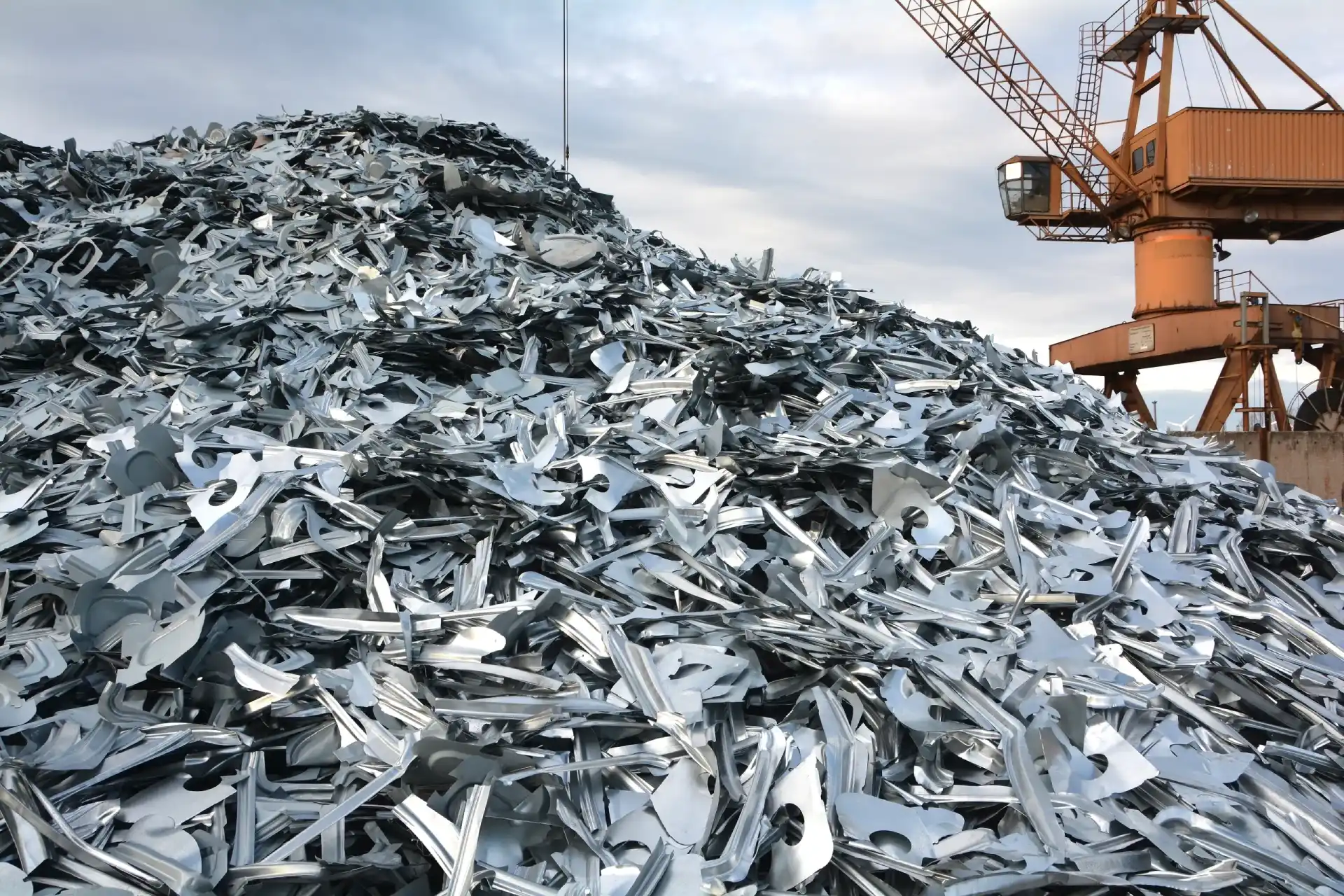
However, it’s worth checking the maths. Suppose we are making a part that weighs 10 kg, and the manufacturing process generates 10 kg of scrap. That requires 20 kg of liquid metal production. If all the scrap is recycled, then 10 kg of that liquid metal comes from ore and 10 kg from recycling.
Now suppose we use DeepForm and reduce the scrap to 2.5 kg. We still need 10 kg of liquid metal from ore, but now only 2.5 kg from recycling. In other words, we have reduced the demand for recycled production—and all its environmental impacts—to a quarter. If any of the scrap sent for recycling is coated (for example, by galvanising), or mixed with other alloys, the benefit is even greater, because additional primary metal is then needed to correct the recycled composition.
The circle implied by the phrase “circular economy” describes how we manage scrap from manufacturing, or material recovered from products at end of life. But both of these are activities we would rather minimise. The most useful metaphor for material efficiency is not a circle, but a long, thin straight line. The best strategy is to use as little material as possible, and to use it for as long as possible.
It is therefore right to say that recycling is good: it delivers lower emissions per tonne of liquid metal than primary production, and at best it can achieve the same quality. But even if recycling is good, reducing demand is always better.
That is what DeepForm offers. By cutting manufacturing scrap at source, it reduces overall demand for metal production and enables OEMs to make the largest possible reduction in the embodied emissions of their metal products.
